Arkansas is truly a dream destination for flyfishermen. It doesn't have the same sex appeal as Florida, Montana, Colorado, or Alaska, but it is truly a fly fishing mecca in its own right. Consider this: Arkansas is home to the world record for brown trout in the four-pound-line class, the world record walleye in the twelve-pound-line class, the world record hybrid striped bass, the world record ozark bass, and the world record shadow bass. The TOSFly team has caught three of these species: brown trout, walleye, and hybrids. The others are in the sunfish family, and we just simply haven't pursued them yet (though we will). My point is simply that Arkansas truly is a destination fishery, and we believe it is one of the best kept secrets in the country. Because of that, we are going to take a daily look at some of the various species this hidden gem has to offer, beginning with the Striped Bass.
 The Striped Bass, or "striper," is one of the most avidly pursued of all fresh water sport fish. Striped Bass Fishing was first introduced to Arkansas in 1956 when Lake Ouachita received twenty-seven North Carolina Stripers. Fifty-eight years later, striper fishing is one of the fastest growing sport fishing segments in Arkansas. Most of that draw is directly attributable to the size of the fight, which is exponentially exacerbated by fighting them on the fly. Some say that fly fishing for striped bass is the only way to pursue them. We at TOSFly tend to agree.
 The Striped Bass is the largest of the popular gamefish family called Temperate Basses, which also includes Hybrid Striped Bass and White Bass. While White Bass seldom exceed 4 lbs. and Hybrid Stripers rarely exceed 20 lbs, Striped Bass live much longer and commonly reach the 30-50 lb range. On Bull Shoals Lake in February of 2012, Rodney Ply of Diamond City, Ark. caught a mammoth striped bass that weighed 68 pounds lakeside! They are out there, you just have to find them.
This is not to downplay the fun in catching White Bass and Hybrids. When the White Bass run in March and/or April each year, you better believe the TOSFly team will be the water pulling them in. It really is an amazing experience to catch those fish, but that is another post for another day. Back to stripers.
Striped bass are native to the Atlantic coastline of North America. Like Salmon, these fish are anadromous, which means they migrate between fresh and salt water, with their spawn taking place in fresh water. They have been introduced into many of the large reservoirs across Arkansas by the state game and fish commission for recreational fishing and as a predator to control populations of shad. This includes Lake Ouachita, Lake Norfork, Beaver Lake, Lake Hamilton, and several other reservoirs in Arkansas.

STRIPED BASS - The Fish
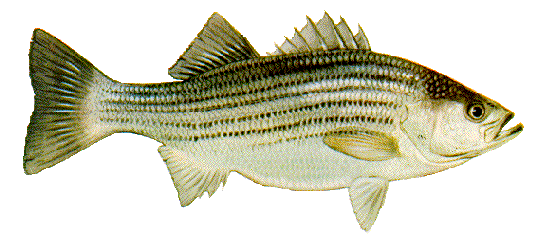 The Striped Bass is the largest of the popular gamefish family called Temperate Basses, which also includes Hybrid Striped Bass and White Bass. While White Bass seldom exceed 4 lbs. and Hybrid Stripers rarely exceed 20 lbs, Striped Bass live much longer and commonly reach the 30-50 lb range. On Bull Shoals Lake in February of 2012, Rodney Ply of Diamond City, Ark. caught a mammoth striped bass that weighed 68 pounds lakeside! They are out there, you just have to find them.
This is not to downplay the fun in catching White Bass and Hybrids. When the White Bass run in March and/or April each year, you better believe the TOSFly team will be the water pulling them in. It really is an amazing experience to catch those fish, but that is another post for another day. Back to stripers.
Striped bass are native to the Atlantic coastline of North America. Like Salmon, these fish are anadromous, which means they migrate between fresh and salt water, with their spawn taking place in fresh water. They have been introduced into many of the large reservoirs across Arkansas by the state game and fish commission for recreational fishing and as a predator to control populations of shad. This includes Lake Ouachita, Lake Norfork, Beaver Lake, Lake Hamilton, and several other reservoirs in Arkansas.
LOCATION - Where To Go
The Natural State offers up plenty of opportunities when it comes to doing battle with mammoth stripers and world-class hybrids. Here are just a few of the hot spots:
Beaver Lake - Jumbo stripers are the main attraction at Beaver Lake, which spreads over 28,220 acres in the Ozark Mountains. Over the years, this lake has given up its share of 40-pound-plus stripers. During the spring, the fish are scattered throughout the lake, but by the time July and August roll around, you can bet on finding these big game fish in the deeper areas of this deep lake. The stripers make a distinct run up the lake’s two main arms during March and April in an attempt to spawn, and in the summer most fish are within about six miles of the dam, where the best deep-water habitat is found. During May, however they might be just about anywhere.

Norfork Lake - Lake Norfork is one of the best fresh water striped bass fisheries in America. The Arkansas Game and Fish Commission has been stocking Lake Norfork with stripers every year for almost 30 years. The average striper here weights about 16 pounds, with the lake record weighing in at a little over 50 pounds. Fish over 40 pounds are caught every year, and is is fairly common to hook up with a 30+ pound fish. Fish population counts continue to show large, healthy populations of striped bass feeding on Lake Norfork's shad. There are plenty of trophy striped bass here to be caught, and there is plenty of time to do it on the fly. The lake never freezes so you can catch these lunkers year round, you just have to know how to do it right!
Ouachita Lake - Ouachita Lake is also one of the cleanest freshwater lakes found in the entire United States, and it offers great striper fishing. The lake’s hatchery is no longer used for stocking stripers because the Arkansas’ Game and Fish Commission has moved to truck releases, which can produce more accurate stocking numbers. But, that doesn’t mean the fishing is anything less than topnotch. In 2010, the recommended striper-stocking rate was two fingerlings per acre of water — or around 80,000 fingerlings per season for Ouachita Lake.
Arkansas River - Stripers can be found from the Oklahoma border to the Mississippi River in the Arkansas River, a distance of 310 miles. However, most fish are concentrated in the tailwaters of the 12 dams that divide the river into pools. While the Arkansas River does not produce many trophy fish, fish up to about 20 pounds do show up pretty regularly, and fish in the 5- to 15-pound range tend to keep fishermen very busy. Finding fish is easier than it would be on vast reservoirs for most anglers because the stripers concentrate in a dozen fairly limited areas. This tends to help when pursuing these fish on the fly.
Greers Ferry - Greers Ferry Lake contains some monster fish! The lake still holds the world records for two species of fish - walleyes and hybrid stripers. The walleye record is a hefty 22 pounds, 11 ounces. In addition, a 27-pound, 5-ounce hybrid striper was caught by Jerry Shaum of Shirley back in 1997. Both fish records are still world records, and it is clear that this fishery is one of a kind! Generally, Greers Ferry Lake hybrids will mostly be found over the big-water areas of the lake toward Heber Springs. You can generally catch them on anything that resembles a shad, so match your fly to what size shad you see in the schools you locate.

There are signs of active stripers all across Arkansas fisheries. The presence of bait fish is typically the most obvious tell-tell sign, and is definitely the most important indication that stripers are active and willing to take your fly. Look for circling birds as they oftentimes work in tandem with the stripers, attacking baitfish from above and below. You'll see birds in the sky coupled with the tail spacking action of the stripers as they run the shad to the surface.
Certain times of the year, you won't be able to miss the activity. Other times, it will seem almost non-existent. Don't give up. Just continue to pursue them, and eventually you will have success, and it will be worth it. Savvy anglers will be there when the feed is on, which happens more often in the summer just above the thermocline in 25- to 30-foot depths, all the way up to the surface. To Arkansas fishermen, the month of June is one of the best times of the year to be fishing for stripers, but the fish can be deep at that time, which makes it difficult for fly fishermen. The best time of year for us is likely mid- to late-spring. Just remember that stripers like cloudy weather — and the worse the weather, the better the bite. Catch them during their spawn run and before they head deep. If you are able to do that, you should have the fight of your life on the fly!

One of the most important factors for success is choosing and using the right fly lines for the given opportunity and conditions. For surface and near surface conditions, a floating or intermediate fly line is needed to present floating, diving, and shallow sinking patterns. For depths greater than 3', we recommend a sinking line. You can choose a variety of different "types" of sinking line based on the depth you are pursuing. This will depend on the time of year and conditions you fish. Again, consider the opportunities your fishery presents and the conditions available before purchasing your line.

Beaver Lake - Jumbo stripers are the main attraction at Beaver Lake, which spreads over 28,220 acres in the Ozark Mountains. Over the years, this lake has given up its share of 40-pound-plus stripers. During the spring, the fish are scattered throughout the lake, but by the time July and August roll around, you can bet on finding these big game fish in the deeper areas of this deep lake. The stripers make a distinct run up the lake’s two main arms during March and April in an attempt to spawn, and in the summer most fish are within about six miles of the dam, where the best deep-water habitat is found. During May, however they might be just about anywhere.
Norfork Lake - Lake Norfork is one of the best fresh water striped bass fisheries in America. The Arkansas Game and Fish Commission has been stocking Lake Norfork with stripers every year for almost 30 years. The average striper here weights about 16 pounds, with the lake record weighing in at a little over 50 pounds. Fish over 40 pounds are caught every year, and is is fairly common to hook up with a 30+ pound fish. Fish population counts continue to show large, healthy populations of striped bass feeding on Lake Norfork's shad. There are plenty of trophy striped bass here to be caught, and there is plenty of time to do it on the fly. The lake never freezes so you can catch these lunkers year round, you just have to know how to do it right!
Ouachita Lake - Ouachita Lake is also one of the cleanest freshwater lakes found in the entire United States, and it offers great striper fishing. The lake’s hatchery is no longer used for stocking stripers because the Arkansas’ Game and Fish Commission has moved to truck releases, which can produce more accurate stocking numbers. But, that doesn’t mean the fishing is anything less than topnotch. In 2010, the recommended striper-stocking rate was two fingerlings per acre of water — or around 80,000 fingerlings per season for Ouachita Lake.
Arkansas River - Stripers can be found from the Oklahoma border to the Mississippi River in the Arkansas River, a distance of 310 miles. However, most fish are concentrated in the tailwaters of the 12 dams that divide the river into pools. While the Arkansas River does not produce many trophy fish, fish up to about 20 pounds do show up pretty regularly, and fish in the 5- to 15-pound range tend to keep fishermen very busy. Finding fish is easier than it would be on vast reservoirs for most anglers because the stripers concentrate in a dozen fairly limited areas. This tends to help when pursuing these fish on the fly.
Greers Ferry - Greers Ferry Lake contains some monster fish! The lake still holds the world records for two species of fish - walleyes and hybrid stripers. The walleye record is a hefty 22 pounds, 11 ounces. In addition, a 27-pound, 5-ounce hybrid striper was caught by Jerry Shaum of Shirley back in 1997. Both fish records are still world records, and it is clear that this fishery is one of a kind! Generally, Greers Ferry Lake hybrids will mostly be found over the big-water areas of the lake toward Heber Springs. You can generally catch them on anything that resembles a shad, so match your fly to what size shad you see in the schools you locate.
FEEDING - What They Like
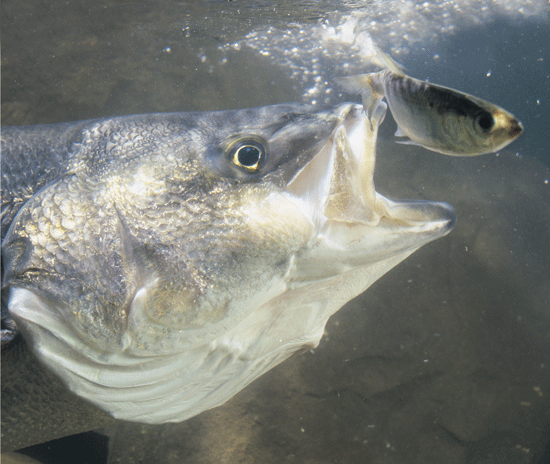
Certain times of the year, you won't be able to miss the activity. Other times, it will seem almost non-existent. Don't give up. Just continue to pursue them, and eventually you will have success, and it will be worth it. Savvy anglers will be there when the feed is on, which happens more often in the summer just above the thermocline in 25- to 30-foot depths, all the way up to the surface. To Arkansas fishermen, the month of June is one of the best times of the year to be fishing for stripers, but the fish can be deep at that time, which makes it difficult for fly fishermen. The best time of year for us is likely mid- to late-spring. Just remember that stripers like cloudy weather — and the worse the weather, the better the bite. Catch them during their spawn run and before they head deep. If you are able to do that, you should have the fight of your life on the fly!
EQUIPMENT - What To Use
The best rod for use in fishing for stripers is an eight -weight with a strong bass leader. Use white and blue streamers across the subsurface to imitate pooling shad. A neutrally buoyant fly and presentation usually works best when going after these behemoths. Most of the time, we fish a sink-tip or sinking head fly line and use rather heavy and/or bulky flies. As they say, a big fish calls for a big fly!One of the most important factors for success is choosing and using the right fly lines for the given opportunity and conditions. For surface and near surface conditions, a floating or intermediate fly line is needed to present floating, diving, and shallow sinking patterns. For depths greater than 3', we recommend a sinking line. You can choose a variety of different "types" of sinking line based on the depth you are pursuing. This will depend on the time of year and conditions you fish. Again, consider the opportunities your fishery presents and the conditions available before purchasing your line.
TIPS - How It's Done
Local knowledge can't be beat, so find a good tackle shop that specializes in fly fishing and find out where they have been biting and on what kind of bait, if not the actual fly pattern. From there, I will leave it up to you. Try it out, and post in the comments if you have success! As always, cast to The Other Side!


